Capability
What can the technology do reliably, and where are its limits?
Discuss a programme Executive AI education
Senior leaders do not need another generic introduction to AI or a parade of product demos. They need a shared language, the confidence to challenge assumptions and a practical way to decide what their organisation should do next.
Practical AI education, grounded in the decisions leaders actually face.A leadership problem, not a vocabulary test
What AI changes, and what it does not
Where the strongest opportunities sit
What good governance looks like in practice
What needs to be true before an idea can scale
The goal is not to turn every leader into an AI expert. It is to give the room enough shared understanding to challenge ideas, see the dependencies and make responsible decisions together.
Inside the one-day bootcamp
The content is shaped around your leadership team, but the day follows a deliberate journey from understanding the landscape to making grounded decisions.
Conversation, challenge and practical exercises.How the learning sticks
Leaders learn by using the ideas, questioning them and connecting them to the decisions already sitting on their desks.
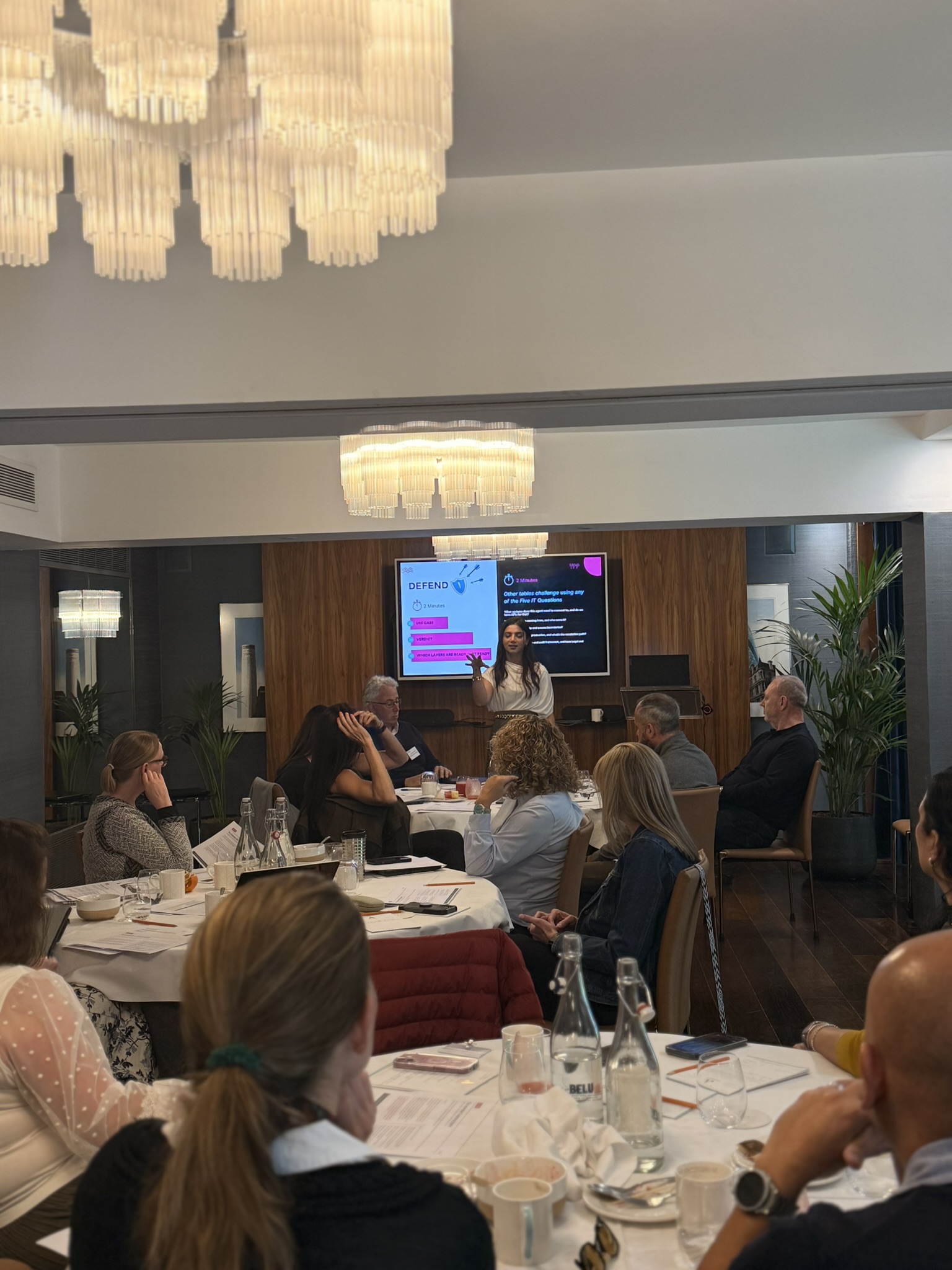
Sessions combine clear explanations with scenarios, group discussion and practical exercises. Teams might challenge a proposed agent, assess whether a use case is actually ready, define where human judgement must remain or identify the questions missing from an AI proposal.
The room leaves with more than awareness. It leaves with a stronger way to think about AI together.
The platforms in context
ChatGPT Enterprise, Claude Enterprise and Gemini Enterprise can all form part of the conversation. The useful question is not which model wins a feature race. It is how a platform fits your work, information, controls, technology estate and risk appetite.
What can the technology do reliably, and where are its limits?
Which workflows, information and people must surround it?
Who owns the outcome, checks quality and decides when a human steps in?
Three ways to begin
No off-the-shelf theatre. The format should match the decisions your leaders need to make.
Take one promising agent idea and work out whether it is useful, viable and ready to move forward.
A practical one-day programme that gives senior leaders a shared language and stronger collective judgement.
A tailored education programme grounded in your strategy, sector, operating model and live AI decisions.
Hear it from Khyati
A short introduction to why leadership teams need to move beyond isolated tools and start building the understanding, confidence and operating foundations to lead AI responsibly.
What leaders leave with
Executive AI training FAQs
It is designed for executive teams, senior leaders and board members who need to make, sponsor or govern decisions about AI. Participants do not need a technical background, and the programme is relevant across functions rather than being aimed at one department.
No. The technology is explained clearly enough for leaders to make informed decisions, but the focus is on business value, operating implications, governance, risk, ownership and implementation. It is leadership education, not developer training.
The day typically covers the AI landscape, generative AI and agents, realistic opportunities and limitations, use-case evaluation, foundations such as process and data, governance and human oversight, and the leadership decisions needed to move forward. Exercises turn each topic into a discussion about your organisation.
Yes. Bespoke programmes can use your strategy, sector, operating model, technology landscape, risk profile and live questions as the context. That may involve interviews or a short discovery phase before the session so the material feels recognisably yours.
Yes. ChatGPT Enterprise, Claude Enterprise and Gemini Enterprise are covered where useful, alongside the wider questions leaders should ask about security, data, integration, governance and fit. The programme is platform-neutral and does not turn into a vendor feature comparison.
Very. Participants work through scenarios, challenge use cases, discuss governance choices and connect the concepts to real decisions. The aim is not six hours of slides. It is to create useful conversation and stronger collective judgement.
Yes. In-person delivery works particularly well for leadership teams because it creates room for candid discussion and group exercises. Virtual or blended delivery can also be designed when location, timing or an international team makes that more practical.
No. The training can be the place where a leadership team develops the shared understanding needed to shape an AI vision or challenge an existing one. If useful, it can also lead into an AI health check, roadmap or transformation programme.
A straightforward first conversation
Book a straightforward conversation about what you are trying to achieve, what may get in the way and whether I can help.
Discuss a programme